
04 May
The Julius Nyerere Leadership Centre (JNLC) in partnership with United Nations Development Programme (UNDP) conducted two leadership trainings for over 80 youth in Uganda. Participants were drawn from various Universities which included; Makerere University, Kyambogo University, Mulago School of Nursing, Institute of Petroleum Studies, Kampala International University, YMCA and Medicare-Mengo.
In the first training held on 14th November 2019 at Fairway Hotel in Kampala, 55 participants were introduced to various leadership concepts and sensitized about the Sustainable Development Goals. During the second training held on 6th December 2019 at the same hotel, 119 participants were equipped with skills on great and transformative leadership. Facilitators included Dr Suzie Nansozi Muwanga, Dr Julius Kiiza, Dr Edward Kaweesi, Mr. Solomon Winyi and Mrs. Winfred Ahimbisibwe from the Department of Political Science and Public Administration, Makerere University. Other facilitators included Mrs. Irene Mutumba, Ms. Allen Baguma and Mr. Isaac Musoke from Private Education Development Network (PEDN); Ms Irene Ikomu from Parliament Watch; Mr. Francis Ekii from BUILD; Mr. Ronald Ssazi from IMPACT Africa; Ms. Hasifa Kabejja from Makerere University; and Ms. Nakimera Kim, a motivational speaker.
The overall goal of the trainings was to equip the youth with transformative leadership skills both formal and informal to enable them maximize their potential and improve their performance to effectively influence development policies and programmes. The trainings were supported by the UNDP Rule of Law and Constitutional Democracy project headed by Mrs. Anette Mpabulungi – Wakabi.
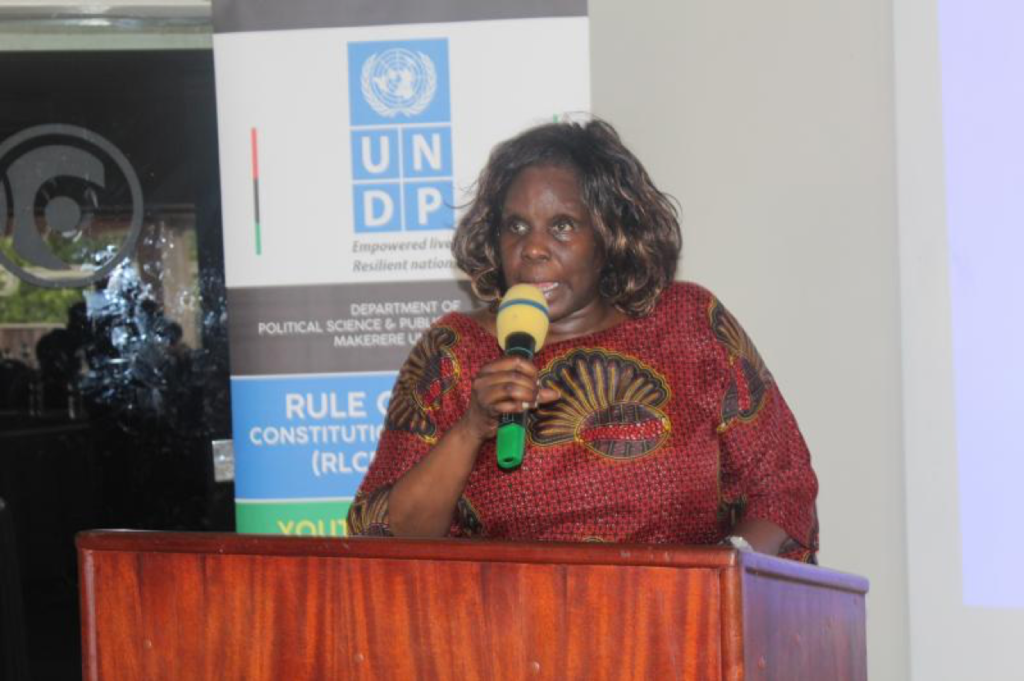
Dr Suzie Nansozi Muwanga addresses participants
In her remarks, Dr Suzie Nansozi Muwanga, Coordinator, Rule of Law and Constitutional Democracy Project at Makerere University re-emphasized the need to nurture youth with leadership qualities to become great transformative leaders that can push forward the country’s development agenda.
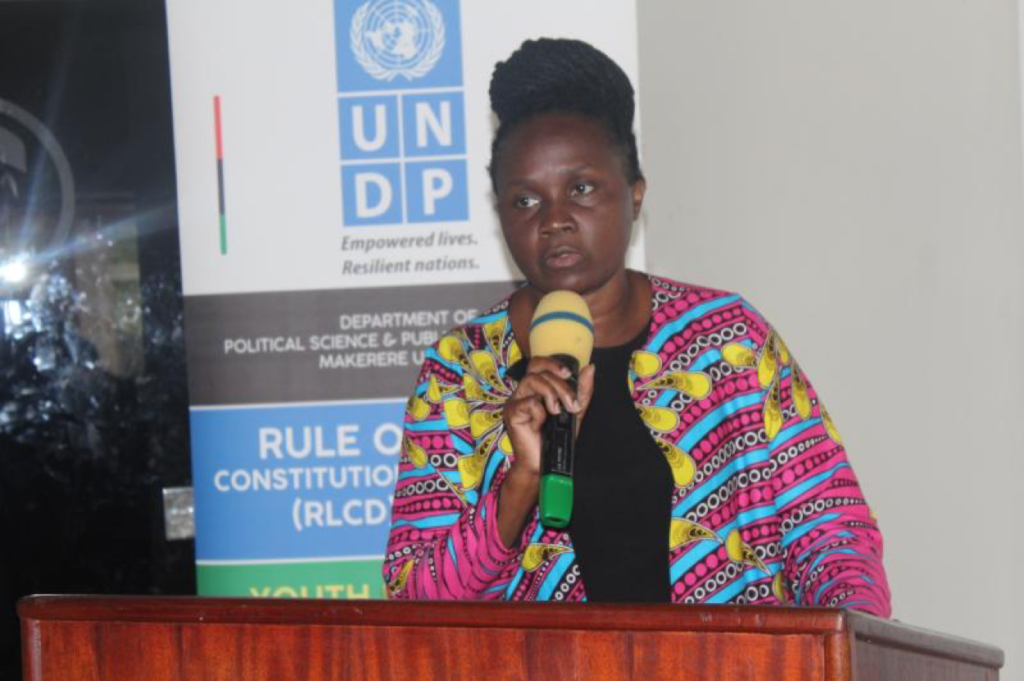
Ms Anette Mpabulungi -Wakabi from UNDP
During the first training workshop, Mrs. Wakabi briefed participants on the objectives of the training and the Rule of Law and Constitutional Democracy project. She emphasized the need for mentorship programmes for youth saying they are critical for the country’s development agenda since they make up the biggest percentage of the population. “It is estimated that by 2015, the youth in Africa reached 400 million. This number presents enormous potential to be tapped into for development,” she noted. Outlining other reasons for the trainings, Mrs. Wakabi said there was scarcity of quality leaders in the country. “Youth cannot become good leaders without the necessary skills. It is therefore important that the youth are nurtured and mentored by those who have the skills to enhance their quality of participation, and subsequently become transformative leaders,” she noted. She also cautioned participants on the importance of time management and accountability in the quest for transformative leadership. “If you can deliver on time, you can deliver change,” she said.
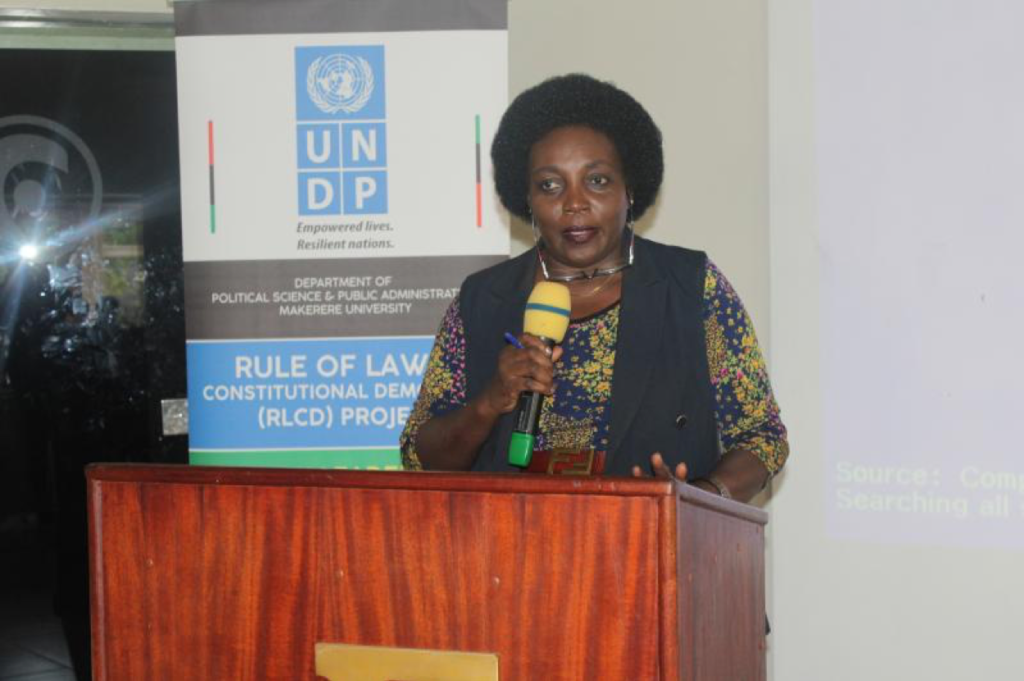
One of the facilitators, Mrs. Irene Mutumba
Mrs. Irene Mutumba from PEDN briefed participants on the importance of transformative leadership. In her presentation, she emphasized the fact that transformative leaders do not deny the world around them. “Transformative leaders never give up. They confront challenges and strive to find solutions. They are vision setters, inspire others, articulate issues, are organic thinkers, role models and must be able to mobilize their communities to cause transformation. Transformative leaders are consistent, value each and every body’s ideas and respect each and every one,” she explained.

Mrs. Winfred Ahimbisibwe trained participants on problem identification and solving
Working with Mrs. Winfred Ahibisibwe, Mr. Ronald Ssazi, Mr. Isaac Musoke, Ms. Hasifa Kabejja and Ms. Nakimera Kim, Mr. Francis Ekii introduced participants to the concept of BUILD. The BUILD concept stands for- Believe, Understand, Invent, Listen and Deliver. Through the BUILD concept, participants learnt that good leadership requires believing in positive change, understanding the communities you want to serve, being innovative to invent solutions that serve the needs of the people, being a good listener who seeks feedback and delivering projects and initiatives to solve the challenges of the communities you serve. Overall, participants learnt that good leadership is about influence and change. “A good leader ought to be an agent of change. This calls for pro-active behavior. Pro-activeness determines how people perceive us,” said Mrs. Ahimbisibwe. Participants also learnt that a transformative leader is action-oriented, persistence, tolerant, sacrifices, a team player and that emotional intelligence, risk management and decision making are special attributes of good leadership. “Leadership is about influence and not just occupying seats. A person cannot be a good leader unless he/she accomplishes a feat/task that creates positive change. As a leader, you need to take action and positive action. If you are not doing so, then you are failing. Leaders have to be creative in solving problems,” said Mr. Ssazi.
Some of the participants during the training
In his presentation titled “Youth and Politics”, Dr. Edward Kaweesi from the Department of Political Science and Public Administration at Makerere University said the youth are potential engines of change since they have the numbers. “This can largely be achieved through associations aimed at creating positive change,” he noted. He warned participants to be conscious of the trust dilemma in their aspiration to become leaders to avoid being corrupted.
Dr. Julius Kiiza, Associate Professor in the Department of Political Science and Public Administration at Makerere University made reflections on the Sustainable Development Goals (SDGs). Addressing participants, Dr. Kiiza said there was need to appreciate the philosophy and institutional location of SDGs. He said there was need to rethink the SDGs basing on country-specific contexts.
During and after the trainings, participants were subjected to group assignments to assess the existing leadership challenges and their application of leadership skills to solve problems.
Leadership Themes/Topic
Presentations at the first training workshop included; “Leadership and Why It Matters” by Mrs. Irene Mutumba and Mr. Isaac Musoke; “Pro-activity, individual skills and interests” by Winfred Ahimbisibwe; “Politics, Culture, leadership and Administration in Uganda” by Dr. Silvestre Kaweesi; and “The UN the SDGs Unraveled” by Dr. Julius Kiiza.
Presentations at the second training workshop included; “Empowering beliefs for youth leaders in Uganda” by Dr. Julius Kiiza; “The 21st Century Youth Leader: What tools you need to have” by Ms. Irene Ikomu; “The importance of emotional intelligence among leaders” by Mr. Francis Ekii; “The Power in Collaboration, Relationship Building and Teamwork” by Mrs. Irene Mutumba and Ms. Allen Baguma; “Leading within the Existing Structures” by Mr. Ronald Ssazi and Mrs. Winfred Ahimbisibwe; “The 21st Century Youth Leader: How to Anticipate and Prepare for a Volatile, Uncertain, Complex and Ambiguous socio-political landscape” by Dr. Edward Kaweesi; and a panel discussion under the theme “Youth in Leadership” Why now? moderated by Mr. Isaac Musoke, Ms. Hasifa Kabejja and Ms. Nakimera Kim.